
Turnkey Electronics Manufacturing: What it covers beyond PCB assembly
 Utsav
•
Aug 24, 2026
Utsav
•
Aug 24, 2026
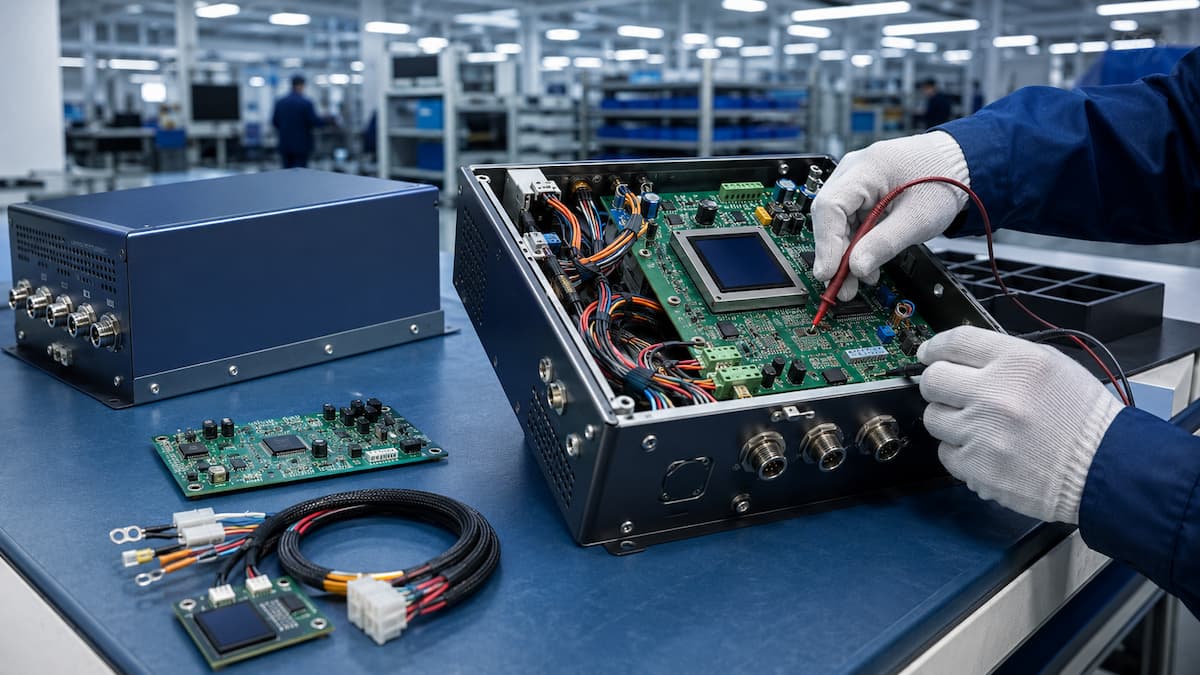
Ask an OEM what “turnkey” means to their EMS partner and you’ll usually hear about the board: sourcing components, populating it, testing it, shipping a tested PCB. That used to be a reasonably complete answer. It isn’t anymore, and the reason has less to do with electronics manufacturing itself than with how hard it has become to run a lean internal supply chain team for everything a board doesn’t cover.
The part of the product that isn’t the PCB
Most electronic products aren’t just a board. A PCB assembly usually ends up inside an enclosure, wired to a display or sensor through a cable harness, mounted with hardware, and shipped as something a customer can actually use out of the box. When a company sources the PCB from one vendor, the enclosure from a second, cable assemblies from a third, and does final integration in house, every one of those handoffs is a place where a shipment slips, a mismatch surfaces late, or nobody is quite sure whose fault a defect is.
This full scope, PCBA plus cabling and harnesses plus mechanical enclosure plus hardware, assembled and tested as one complete unit, is generally what the industry calls box build assembly. It’s the layer of turnkey electronics manufacturing that sits above board-level assembly, and it’s where a genuinely turnkey EMS partner earns the term.
Why this is becoming the default, not the exception
2026 has not been a quiet year for component sourcing. Allocation pressure on certain part categories, ongoing tariff volatility, and the compliance overhead of newer ESG and carbon reporting requirements have all made it harder to run sourcing as a purely internal function for anything beyond the smallest production runs. Coordinating five separate vendors was already a logistics burden in a stable market; in a market where lead times shift and pricing moves without warning, it becomes a genuine risk to a launch date.
India’s own electronics component ecosystem is also shifting under this. Government data through early 2026 shows the original large-scale electronics manufacturing incentive scheme reporting cumulative investment nearly three times its original five-year target, and the newer Electronics Components Manufacturing Scheme, which specifically targets PCBs, passive components, sub-assemblies, and connectors, had its Union Budget outlay raised to ₹40,000 crore for 2026 to 2027. Domestic value addition in Indian electronics manufacturing has climbed to roughly 18 to 20 percent, up from a much thinner base a few years ago. What that means practically is that more of a product’s component and sub-assembly supply chain is genuinely available inside India now than was true even two years ago, and a turnkey EMS partner is the entity actually positioned to take advantage of that shift on your behalf, since evaluating and qualifying new domestic suppliers as they come online isn’t something most product companies want as an internal job.
What a genuine turnkey scope includes
Beyond the PCB itself, a full turnkey electronics manufacturing engagement typically covers:
- Cable and harness assembly: wiring that connects the board to displays, sensors, motors, or other sub-assemblies, built and tested as part of the same production flow rather than sourced separately
- Mechanical enclosure integration: fitting the assembled board and harnessing into the product housing, including hardware assembly
- Functional testing at the product level: not just verifying the board works in isolation, but testing the complete assembled unit the way a customer will actually use it
- Packaging to final specification: shipping a product ready for the shelf or the next stage of distribution, not a bare board in an anti-static bag
Some engagements go further still, into aftermarket support such as repair and refurbishment for products already in the field, though that’s a service tier worth confirming explicitly rather than assuming is included.
A practical way to tell if a quote is actually turnkey
The word “turnkey” gets applied loosely. A useful test: ask what happens to your product between “board tested” and “customer receives it.” If the answer involves shipping the board to you, or to a second vendor, for enclosure fitting and final assembly, that’s board-level turnkey, which is a real and useful service, but it’s not the same as product-level turnkey. Neither is wrong, but they’re priced differently, they carry different risk, and they should be described differently in your RFQ so you’re comparing quotes that actually mean the same thing.
How this fits Alica Technologies’ turnkey model
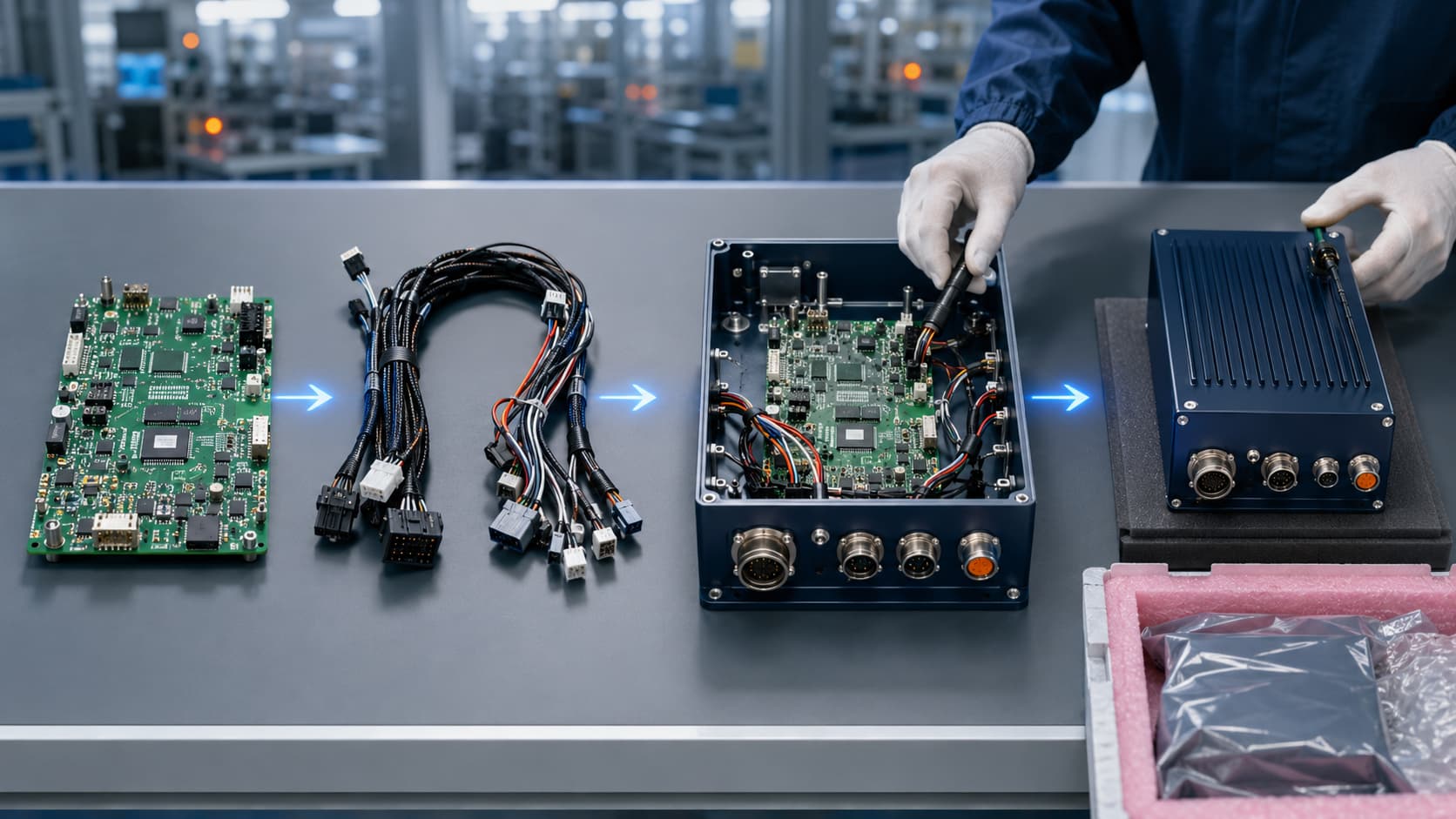
Alica Technologies runs PCB-level turnkey assembly as a core service from our facility in Ahmedabad, and we scope box build and product-level integration work case by case depending on what a specific product needs. That distinction matters because we’d rather tell you plainly what’s included in a given quote than let “turnkey” carry more meaning than the contract actually delivers. Component sourcing, traceability, and BOM risk management, the pieces most likely to go wrong when a supply chain is split across vendors, sit inside our process whether the scope is board-level or extends further into your product.
If you’re weighing how much of your product to bring under one manufacturing partner, our turnkey PCB assembly guide covers the board-level model in depth, and our EMS partner selection checklist has the fuller set of questions worth asking any vendor before you commit.
Frequently asked questions
Is box build assembly the same as turnkey PCB assembly?
No. Turnkey PCB assembly means the vendor sources components and builds the board. Box build assembly extends that to the full product: cabling, enclosure, hardware, and final testing of the complete unit, not just the board.
Does turnkey electronics manufacturing cost more than managing vendors separately?
Not necessarily once you account for the coordination overhead, shipping between vendors, and risk of mismatched timelines that a split supply chain creates. The per-unit component cost may look marginally different, but the total cost of running the project usually favours consolidation.
Can a product move from board-level to full turnkey mid-project?
Yes, this is common during the shift from prototype to volume production, once a product’s enclosure and cabling design has stabilised enough to bring into the same production flow as the board.
Why does India’s component ecosystem matter for turnkey sourcing?
As more PCB, passive component, and sub-assembly manufacturing localises within India under current government incentive schemes, EMS partners have a growing base of domestic suppliers to qualify and source from, which a turnkey partner can evaluate on a customer’s behalf rather than leaving that supplier vetting work to the OEM.
What should I ask a vendor to confirm before assuming a quote is fully turnkey?
Ask specifically what happens between a tested board and a shipped product. If cabling, enclosure fitting, or final testing happen outside their facility or under a separate contract, the quote is board-level turnkey, not product-level.
Looking for a reliable EMS partner?
Get a quote for PCB assembly, turnkey manufacturing, or prototype builds.
Get in Touch