
Where to Order PCB Assembly: A complete guide
 Utsav
•
Aug 31, 2026
Utsav
•
Aug 31, 2026
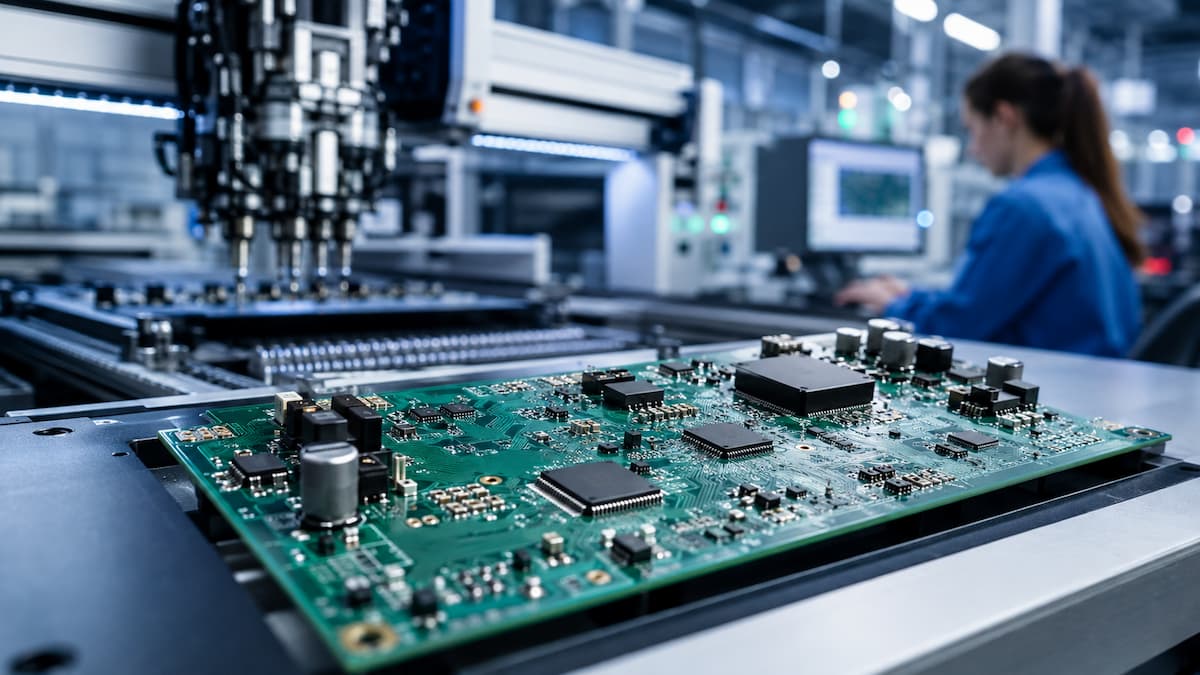
Choosing where to order PCB assembly is one of the most consequential decisions in any electronics project. The wrong manufacturer can delay production schedules, increase costs, and compromise the reliability of the final product. The right one delivers assemblies that meet design specifications consistently and on schedule.
This guide covers what PCB assembly involves, what criteria to use when evaluating manufacturers, the types of orders available, and how to compare sourcing options.
What is PCB Assembly?
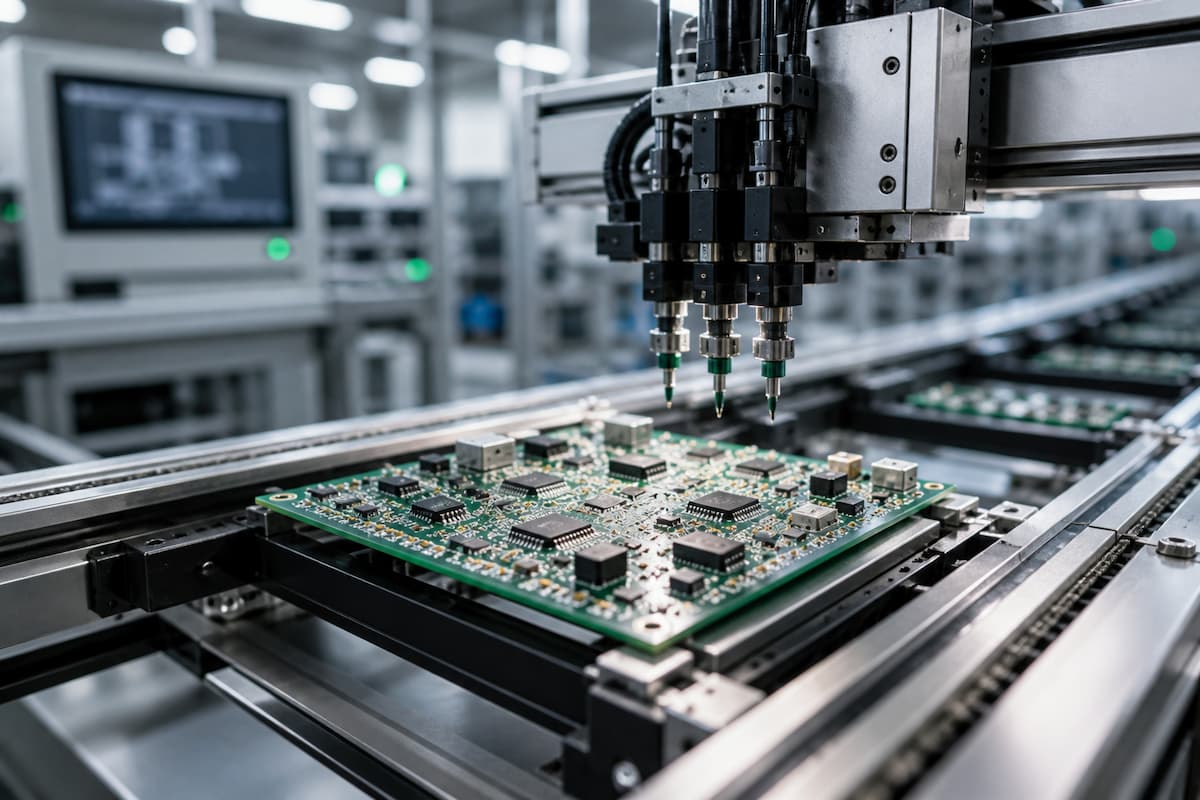
PCB assembly (PCBA) is the process of soldering electronic components onto a bare printed circuit board to produce a functional electronic assembly. The bare board is fabricated separately. During assembly, components such as resistors, capacitors, integrated circuits, and connectors are placed and soldered onto the board.
There are two primary assembly methods.
Surface Mount Technology (SMT) places components directly onto the surface of the board using automated pick-and-place machines, followed by soldering through a reflow oven. SMT is the standard method for most modern electronics, supporting high component density and throughput.
Through-Hole Technology (THT) inserts component leads through drilled holes in the board and solders them on the underside. THT is used for components that require stronger mechanical bonds, such as power connectors, large capacitors, and transformers.
Most production boards use a combination of both methods, applying SMT for the majority of components and THT where mechanical or electrical requirements call for it.
Why the choice of PCB Assembly Manufacturer matters
A PCB assembly order is not a standardized transaction. Every board has a unique combination of component types, layout density, thermal requirements, IPC class, and volume. These factors directly affect how a manufacturer must approach the project.
A manufacturer without the appropriate equipment may produce boards with cold solder joints, bridging, or tombstoning defects. A manufacturer without adequate quality systems may ship defective boards without detecting them. A manufacturer without engineering experience may not identify problems in the BOM or Gerber files before production begins.
The consequences of poor-quality assembly often appear long after delivery, in the form of field failures, rework costs, and warranty claims.
What to look for when ordering PCB Assembly
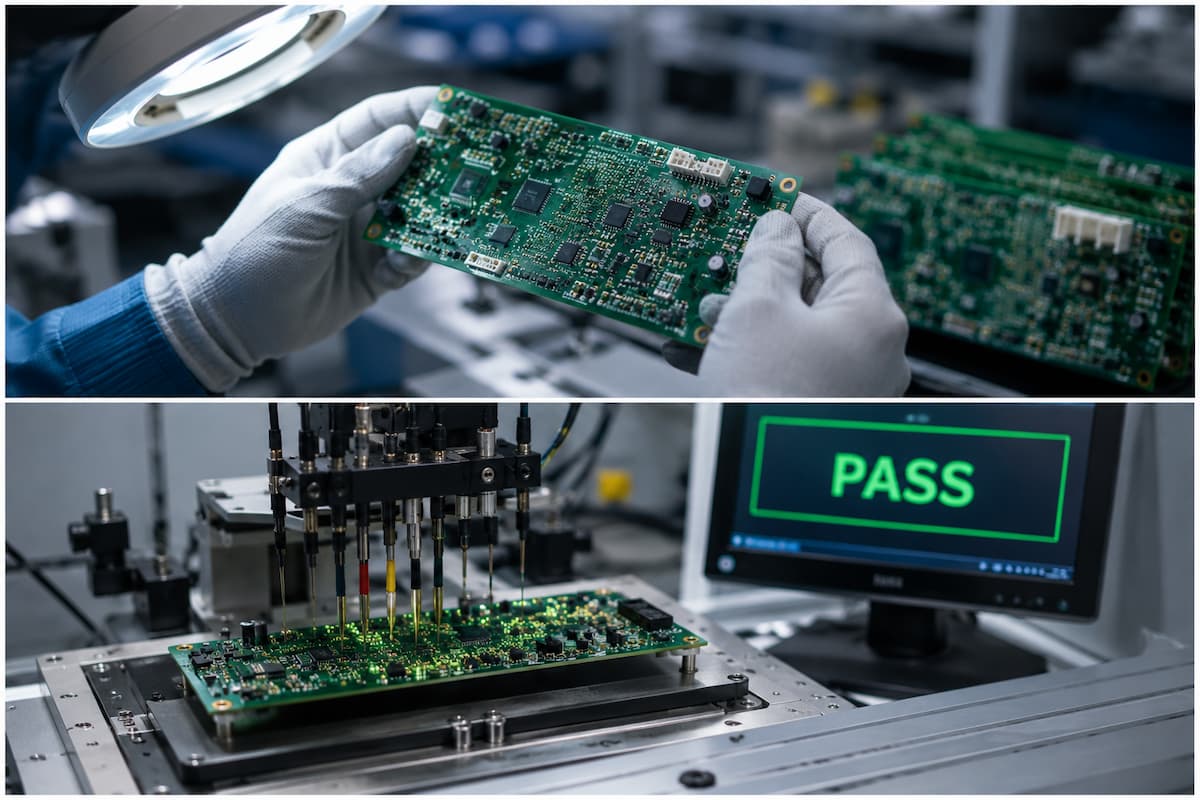
Evaluating a PCB assembly manufacturer requires examining several areas: equipment capabilities, inspection processes, quality certifications, engineering support, supply chain management, and production scalability.
Manufacturing capabilities determine whether the manufacturer can handle the specific requirements of a given design. This includes board size, layer count, component packages such as fine-pitch SMT and BGA, and the ability to process mixed SMT and THT assemblies. A manufacturer with limited equipment may subcontract critical steps to third parties, reducing traceability and quality control.
Inspection and testing equipment is a reliable indicator of a manufacturer’s commitment to quality. A capable PCB assembly partner operates Solder Paste Inspection (SPI) before component placement, Automated Optical Inspection (AOI) after reflow, and X-Ray inspection for hidden solder joints on BGAs and QFN packages. Without X-Ray, internal joints on area-array components cannot be verified. In-Circuit Testing (ICT) and functional testing verify that the assembled board performs as intended.
Quality standards and certifications define what criteria the manufacturer is formally accountable to. IPC-A-610 is the widely recognized industry standard for electronic assembly acceptability. Manufacturers who follow IPC-recommended SOPs inspect boards against documented, consistent criteria rather than internal benchmarks. ISO 9001 certification indicates the presence of a formal quality management system. For applications in aerospace, medical, or defense sectors, IPC Class 3 compliance is a requirement.
Engineering support provided before production begins reduces the risk of costly errors. A Design for Manufacturability (DFM) review examines Gerber files, the bill of materials, and assembly drawings for issues such as incorrect land patterns, stencil aperture mismatches, and component placement that is prone to defects. Manufacturers who perform DFM reviews as a standard step, rather than an optional add-on, reduce the likelihood of production-stage problems.
Supply chain and component sourcing capability is relevant for turnkey assembly orders, where the manufacturer procures components on behalf of the customer. This requires established relationships with authorized distributors, processes for counterfeit component mitigation, and experience managing BOM revisions and long-lead-time parts. For consigned assembly, where the customer supplies components, the manufacturer must have procedures to receive, store, and manage customer-owned inventory.
Capacity and scalability determine whether a manufacturer can serve a project across its full lifecycle, from initial prototype to volume production. Some manufacturers are configured only for small-volume or prototype work. Others are oriented toward high-volume production and impose minimum order quantities that are impractical for early-stage projects. A manufacturer able to support both prototype and production volumes reduces the need to change vendors as requirements evolve.
Types of PCB Assembly orders
Prototype PCB assembly involves small quantities, typically between 5 and 50 boards, used to validate a design before committing to volume production. Speed, engineering feedback, and design iteration support are the primary considerations at this stage.
Low-volume PCB assembly covers quantities from approximately 50 to 1,000 units. This range is relevant for pre-production validation, limited market release, and early customer deliveries. Unit costs are higher than in volume production, but a manufacturer with appropriate processes can deliver consistent quality within this range.
High-volume PCB assembly applies to production quantities above 1,000 units. At this scale, advanced automation, tightly controlled processes, and well-managed component procurement are required to maintain quality and cost targets.
Turnkey assembly means the manufacturer sources all components, manages procurement, and delivers fully assembled boards. The customer provides design files and specifications. This model reduces the coordination burden on the customer and consolidates accountability with a single supplier.
Consigned assembly means the customer supplies some or all components, and the manufacturer contributes equipment, labor, and process expertise. This is appropriate when the customer holds existing component inventory or requires control over specific parts of the supply chain.
Where to Order PCB Assembly: Sourcing options
Domestic manufacturers offer shorter lead times, direct communication, and lower logistical risk. Import duties and customs delays are not a factor. Intellectual property protection is generally more straightforward under domestic legal frameworks. For projects with tight timelines or compliance requirements, a domestic EMS partner reduces uncertainty.
Overseas manufacturers are commonly used for high-volume production where per-unit cost reduction is the primary objective. Manufacturing in China, Southeast Asia, and other regions with lower labor costs can reduce production costs significantly at scale. Trade-offs include longer lead times, higher minimum order quantities, potential communication and time zone gaps, and reduced visibility into day-to-day production quality.
Online PCB assembly platforms offer standardized quoting and ordering for prototype and low-volume runs. These platforms can provide fast turnaround for simple designs. Engineering support is generally limited, customization options are restricted, and quality oversight varies by provider.
Alica Technologies: PCB Assembly and EMS Services in India
Alica Technologies LLP is a pure-play Electronic Manufacturing Services (EMS) company based in Ahmedabad, India. The company has assembled over 500,000 PCBs across more than 90 projects, serving OEMs in multiple industries with PCB assembly, testing, inspection, and turnkey manufacturing services.
Alica Technologies operates SMT and THT assembly lines capable of handling a range of board types, component packages, and production volumes. Every assembly undergoes a multi-stage inspection process that includes SPI before placement, AOI after reflow, and X-Ray inspection for hidden-joint components. This provides 100% inspection coverage across all production batches.
The company follows IPC-recommended standard operating procedures at every stage of assembly, ensuring that boards are evaluated against recognized industry criteria. DFM reviews are part of the standard pre-production process, covering Gerber files, BOM, and assembly drawings before production begins.
Alica Technologies offers rapid prototyping services for teams at the design validation stage, as well as full turnkey project delivery that covers component procurement, assembly, testing, and final delivery. For OEMs that require a broader manufacturing scope, the company also provides box build assembly and end-to-end electronic manufacturing services.
Key Questions to ask before placing a PCB Assembly order
Evaluating a manufacturer before placing an order reduces the risk of quality or delivery issues later.
- What inspection equipment is in operation: SPI, AOI, X-Ray?
- Does the manufacturer assemble to IPC-A-610 standards, and to which class?
- Is a DFM review performed on Gerber files and BOM before production begins?
- For turnkey orders, which component distributors are used, and what counterfeit mitigation processes are in place?
- What are the lead times for prototype runs and volume production separately?
- Can the manufacturer support both low-volume and high-volume requirements without a change in process or vendor?
- What electrical testing options are available: in-circuit testing, functional testing, or boundary scan?
Author Opinion
Selecting where to order PCB assembly involves evaluating equipment capabilities, quality systems, engineering support, supply chain processes, and production scalability. Unit cost is one input, but it is not the only factor that determines the value delivered by a manufacturing partner.
OEMs and product teams that prioritize quality, traceability, and reliable delivery will benefit from partnering with a manufacturer that maintains advanced inspection equipment, follows recognized quality standards, and provides engineering support throughout the production process.
Contact Alica Technologies to discuss PCB assembly requirements, request a quotation, or submit design files for a DFM review.
Tagged in
Looking for a reliable EMS partner?
Get a quote for PCB assembly, turnkey manufacturing, or prototype builds.
Get in Touch