
Every PCB assembly project starts with the same decision, whether it’s stated explicitly or not: who sources the components? Answer that question and you’ve decided between the two fundamental assembly models, turnkey PCB assembly, where a single vendor handles everything from component procurement to final testing, and consignment, where you supply the parts and the assembler handles labour only.
This guide covers what turnkey PCB assembly actually includes, how the process works step by step, and when it’s the right call for your product.
What is Turnkey PCB Assembly?
 Turnkey PCB assembly is a manufacturing model where a single EMS partner takes full responsibility for the entire build, sourcing every component on the Bill of Materials (BOM), assembling the board, testing it, and packaging the finished product. You hand over a design file and receive a tested, ready-to-ship assembly. Nothing in between requires you to manage a separate supplier relationship.
This is distinct from consignment assembly, where you procure and ship the components yourself and the EMS provider only handles placement and soldering.
Turnkey vs Consignment: The core difference
| Factor | Turnkey | Consignment |
|---|---|---|
| Component sourcing | Handled entirely by the EMS partner | Handled by you |
| Supplier relationships | Single point of contact | Multiple vendors to manage yourself |
| Component risk (shortages, counterfeits, EOL parts) | Shifted to the EMS partner | Remains with you |
| Control over specific suppliers | Lower, unless you specify approved vendors | Full control |
| Operational overhead on your side | Minimal | Significant — logistics, timing, inventory |
| Best fit for | OEMs who want one accountable partner | Companies with existing component contracts or specific sourcing requirements |
The Turnkey PCB Assembly process, step by step
- Design and BOM Review: The EMS partner reviews your Gerber files, BOM, and assembly drawings — flagging DFM issues, obsolete parts, or sourcing risks before procurement begins.
- Component Sourcing: Every part on the BOM is procured from qualified suppliers, with traceability documentation (Certificates of Conformance) maintained for each batch.
- Incoming Quality Check: Components are inspected on arrival to confirm they match specification before they ever reach the line.
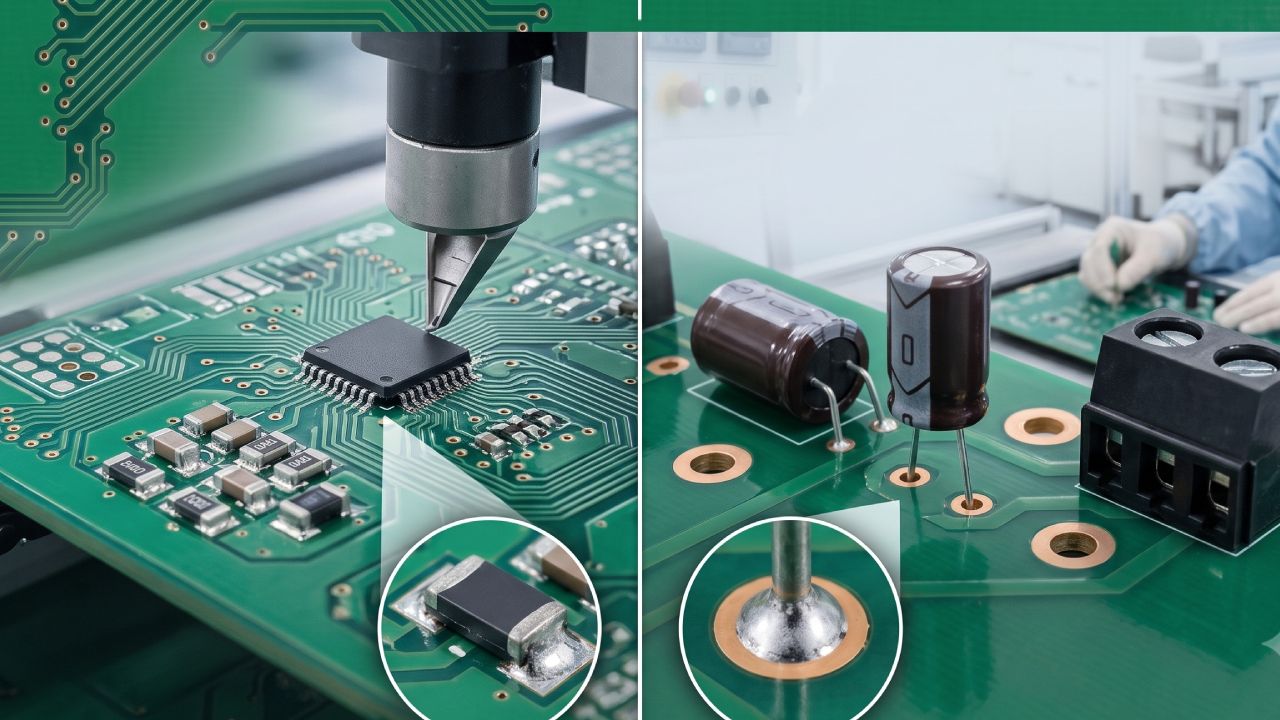
- PCB Assembly: SMT, THT, or mixed-technology assembly runs based on your board’s design.
- Inspection and Testing: SPI, AOI, X-ray, and functional testing as required by your product’s quality class.
- Packaging and Delivery: Finished assemblies are packaged to your specification and shipped as a completed product, not a work-in-progress.
Benefits of Turnkey PCB Assembly
One Accountable Partner
When something goes wrong in a consignment model – a wrong component, a late shipment, a quality issue – the first question is always “whose fault was it, the supplier or the assembler?” Turnkey removes that ambiguity. One vendor, one point of accountability.
Reduced Component Risk
Component shortages, counterfeit parts, and end-of-life obsolescence are real risks in electronics sourcing. A turnkey partner with an established supplier network and BOM management discipline absorbs this risk on your behalf, including qualifying alternate parts when something goes out of stock mid-production.
Lower Operational Overhead
You’re not managing multiple vendor relationships, chasing shipment timing across suppliers, or holding component inventory. That overhead sits with your EMS partner instead of your internal team.
Faster Time to Market
Because sourcing and assembly are coordinated by the same team, there’s no handoff delay between “components arrived” and “assembly starts.” This matters most during NPI and prototype-to-production transitions, where speed directly affects your launch timeline.
When consignment might still make sense
Turnkey isn’t universally the better choice. If you have existing volume-pricing agreements with specific component distributors, regulatory requirements mandating particular suppliers, or components you’re sourcing as part of a separate supply chain strategy, consignment gives you the control turnkey trades away. Some companies also run a hybrid model — turnkey for standard components, consignment for a handful of critical or custom parts.
Why Alica Technologies for Turnkey PCB Assembly
Alica Technologies operates as a genuine single-vendor turnkey partner from our facility in Ahmedabad, not a broker who subcontracts sourcing or assembly to a third party. Here’s what that looks like in practice:
- Full component sourcing and traceability: Every component is procured through qualified suppliers with Certificate of Conformance documentation maintained for the build.
- Inspection built into every stage: SPI, post-placement AOI, post-reflow AOI, and X-ray inspection run as standard on turnkey builds — not as a premium add-on.
- Mixed-technology capability under one roof: SMT, THT, and selective soldering are all handled at our facility, so a turnkey build doesn’t get split across multiple subcontracted vendors.
- DFM engagement at NPI: Our team reviews your design and BOM before procurement begins, catching sourcing and manufacturability risks early rather than after components have already been ordered.
- Track record: 500,000+ PCBs assembled and 90+ successful projects delivered, with 100% inspection coverage across builds — turnkey and consignment alike.
Read more about our Turnkey Project Delivery service, or see how we approach end-to-end electronic manufacturing from prototype through volume production.
Frequently asked questions
What’s the difference between turnkey and consignment PCB assembly?
In turnkey assembly, the EMS partner sources every component and manages the full build. In consignment, the customer supplies the components and the EMS partner handles assembly labour only.
Is turnkey PCB assembly more expensive than consignment?
Not necessarily. While component markup is a factor, turnkey often reduces total cost by eliminating sourcing overhead, minimising shortage-related delays, and avoiding the hidden cost of managing multiple vendor relationships.
Can I specify certain component suppliers in a turnkey model?
Yes. Most turnkey EMS partners accommodate an approved manufacturer list (AVL) for critical components while sourcing the rest of the BOM independently.
What happens if a component goes out of stock during a turnkey build?
A capable turnkey partner has a defined process for sourcing and qualifying alternate parts, keeping your production timeline on track without requiring you to manage the substitution yourself.
Is turnkey assembly suitable for prototype builds, or only volume production?
Turnkey works well for both. In fact, it’s especially useful during NPI and prototyping, when speed and single-point accountability matter most for hitting launch timelines.